Services

Host Configuration Review


Our host configuration review identifies security misconfigurations, prioritizes fixes to ensure hardened baselines.

Host configuration review for enterprise servers and network devices

Attackers start at the host—so should your defense

A host configuration review is a structured security assessment of the operating-system settings on servers and network devices. It audits them against CIS Benchmarks or vendor security configuration guidelines. Unlike network penetration testing, which looks for exploitable weaknesses from outside the host, this review examines the configuration state directly. For teams managing a large server estate, it shows where approved build standards have been applied consistently, where configuration drift has appeared, and where unapproved deviations have introduced risk. Swarmnetics delivers the service through Offensive Security Certified Professional (OSCP) and CREST Registered Penetration Tester (CRT) certified consultants.

When one misconfigured host becomes the pivot point

Turning baselines into verified security assurance

In April 2025, South Korea’s largest mobile carrier, SK Telecom, disclosed a breach after attackers planted malware across 28 Linux servers. They exfiltrated about 26.96 million subscriber identity records. The Ministry of Science and ICT’s final investigation identified poor credential management and failure to encrypt critical data as the main causes. It also found that passwords had no expiry and were not rotated for years. A host configuration review would have identified plaintext credential storage, missing encryption controls, and long-lived administrative passwords before the attackers expanded their foothold across the environment.

One misconfigured host can become the pivot point for lateral movement inside an otherwise segmented network. Validating your security posture at the host level closes the gap between the approved build standard and the settings actually running in production. That matters most in environments where teams assume standard builds are in place, but have not confirmed whether those standards were implemented consistently across every in-scope host.
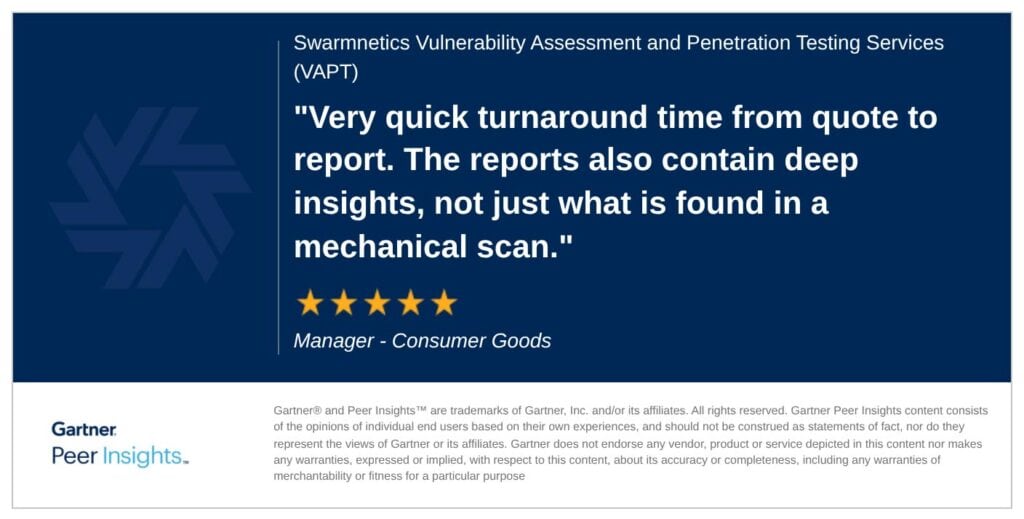
Gartner Peer Insight Review

Find the gap between policy and live configuration

Because real security doesn’t fade after deployment

The assessment phase starts with controlled extraction of host data from each in-scope server or network device. Our consultants assess each dataset against CIS Benchmarks as the primary standard.

We may apply DISA Security Technical Implementation Guides (STIGs) and vendor hardening guidance where CIS coverage is unavailable. Each host is measured against its benchmark profile. We separate genuine weaknesses from approved business deviations before reporting. Nessus Professional supports the review, but manual validation remains essential because automated tools cannot judge context, exception handling, or compensating controls. That helps your team distinguish baseline drift from justified exceptions, instead of treating every variance as the same kind of problem. Where configuration intent is unclear, our consultants interview system owners before finalising the configuration review.

Yes, we are CREST accredited

Our core team is based in Singapore and consists of CREST certified penetration testers who are also Offensive Security Certified Professional (OSCP) certified. The team has delivered numerous penetration testing projects for customers in Singapore and other locations, from large multinational enterprises to small and medium business, and across various industries.

CREST Pentest

What gets reviewed across the host attack surface

Focus on operating system level settings

A host configuration review covers the following areas on each in-scope server or network device:

  • Password policy — minimum length, complexity, rotation, and lockout thresholds
  • Audit logging and monitoring — whether logging is enabled, which events are captured, and where logs are stored
  • Critical file and directory permissions — world-writable files, unprotected configuration files, and sensitive data stored without encryption
  • Remote access configuration — SSH hardening, disabled insecure protocols, and access restrictions

FAQ

A host configuration review checks how a server or network device is configured against CIS Benchmarks or vendor hardening guidance. A network penetration test tries to exploit reachable weaknesses to measure impact. The two services answer different questions. One shows whether the host is hardened properly, while the other shows what an attacker could do with what is exposed.

The review focuses on operating-system-level settings across each in-scope host. That includes user and privilege configuration, password policy, audit and event logging, file and directory permissions, running services, remote access settings, and unchanged default credentials. Each issue is mapped to the relevant benchmark or vendor guideline. It includes a severity rating and a clear remediation step.

Two access models are available. In the online model, your team grants administrative or root-level access and we collect the configuration data directly. In the offline model, your administrators extract the data with scripts or built-in operating system tools for our consultants to review offsite. The offline model is often preferred where direct external access to production systems is not allowed.

A misconfigured host can give an attacker a path to escalate privileges, move laterally, maintain persistence, or access sensitive data without needing a separate software vulnerability. Once the attacker reaches the system, weak host settings themselves can become the attack path.

A host configuration review from Swarmnetics produces a draft report for your review, followed by a final report upon acceptance. The report maps every finding to CIS Benchmarks for the relevant operating system and vendor hardening guidelines with a severity rating, a description of the configuration gap, and specific remediation guidance. An executive summary is included for non-technical stakeholders. After you have remediated the findings, we conduct a follow-up review to confirm adequate remediation.

A host configuration review is relevant to any organisation that needs to validate that its servers and network devices are configured securely. It is particularly relevant for organisations subject to regulatory, contractual, or industry security requirements, which requires demonstrable evidence of secure configuration and hardening. A host configuration review is also recommended after significant infrastructure changes, migrations, or new system deployments. Swarmnetics has delivered host configuration reviews across all sectors since 2015.

The duration of a host configuration review depends on the number of hosts and devices in scope and their complexity. A typical host configuration review engagement takes three to five business days, followed by an initial report within five business days for your review.

A host configuration review is often required for compliance with applicable regulatory, contractual, or industry security obligations where organisations must implement and validate secure configurations for servers and endpoints. It provides documented evidence of compliance with hardening standards that regulators and auditors may request.

Every host configuration review follows a three-phase process. In the planning phase, Swarmnetics agrees the scope and schedule with your team. In the assessment phase, our consultants extract the host configuration data using scripts and operating system interface tools and assess them against CIS Benchmarks for the applicable operating system or vendor security guidelines, conducting interviews with relevant team members where needed to confirm configuration intent. In the reporting phase, we deliver a draft report for review and a final report with remediation guidance mapped to the applicable standard.

All Swarmnetics configuration reviews are conducted by our Singapore-based team of security consultants holding the Offensive Security Certified Professional (OSCP) and CREST Registered Penetration Tester (CRT) credentials. Swarmnetics has been delivering technical security assessments to organisations across Singapore since 2015 and serves as a trusted VAPT partner for leading enterprises across technology, telecommunications, and professional services.

The security assessment report includes specific, actionable remediation guidance for every finding — not generic advice. For each vulnerability, we describe the fix, its priority based on CVSS severity, and any dependencies between remediation steps. Once your team has addressed the findings, Swarmnetics conducts a follow-up retest to verify that each vulnerability has been adequately remediated. The final report confirms closure and provides documented evidence of remediation.